A co-designed toolkit helping businesses welcome autistic Australians
IN PARTNERSHIP WITH MASTERCARD
Inclusion matters
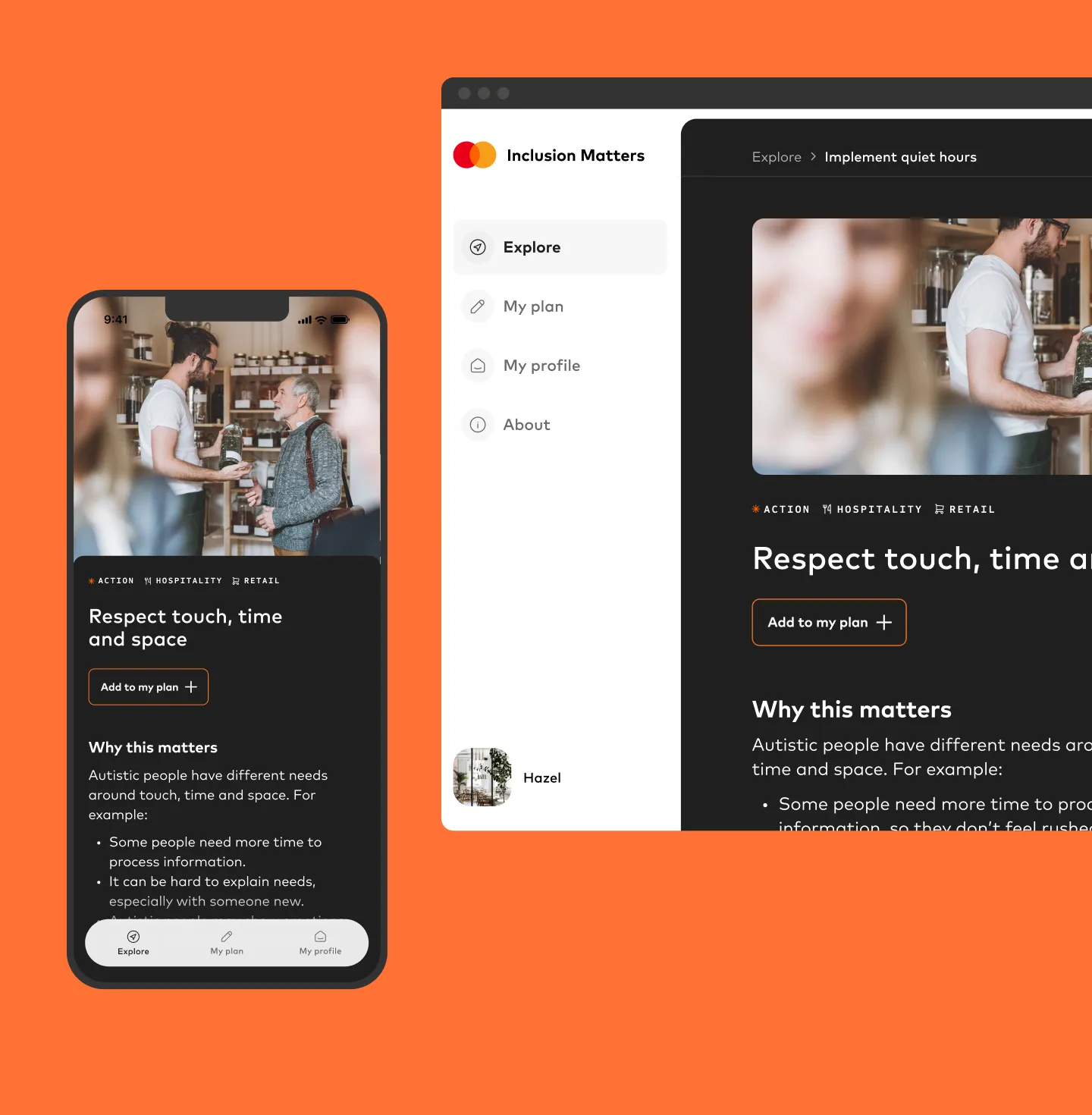
Earlier this year, we launched the Mastercard Inclusion Hub with Autism CRC—a practical toolkit helping businesses create more welcoming spaces for autistic Australians and people with sensory differences.
This project exists because of Mastercard’s vision and commitment to inclusion by design. They challenged us to create something that goes beyond what’s already available and provided clear direction to meaningfully engage with the autistic community in shaping this campaign.
One in 40 Australians identify as autistic, yet too many everyday spaces remain inaccessible to them. This project is about changing that through action, not awareness.
Today led the digital experience design and build, working in close partnership with Autism CRC and guided by Mastercard’s Asia Pacific marketing and communications team, led by Julie Nestor, who championed this work every step of the way.

What makes this work meaningful
The autistic community drove the insights, shaped the solutions, and will continue to guide the platform's evolution. As we write in our Inclusive Design guide, “once you understand the power of participatory design, the next logical question is ‘Who should participate?’” This work answers that clearly—the people most affected must lead.
The genuine reciprocity matters here. The autistic community gains tools that influence real change in the spaces they navigate daily. Businesses gain access to a growing market and the capacity to serve their communities better.
How it works
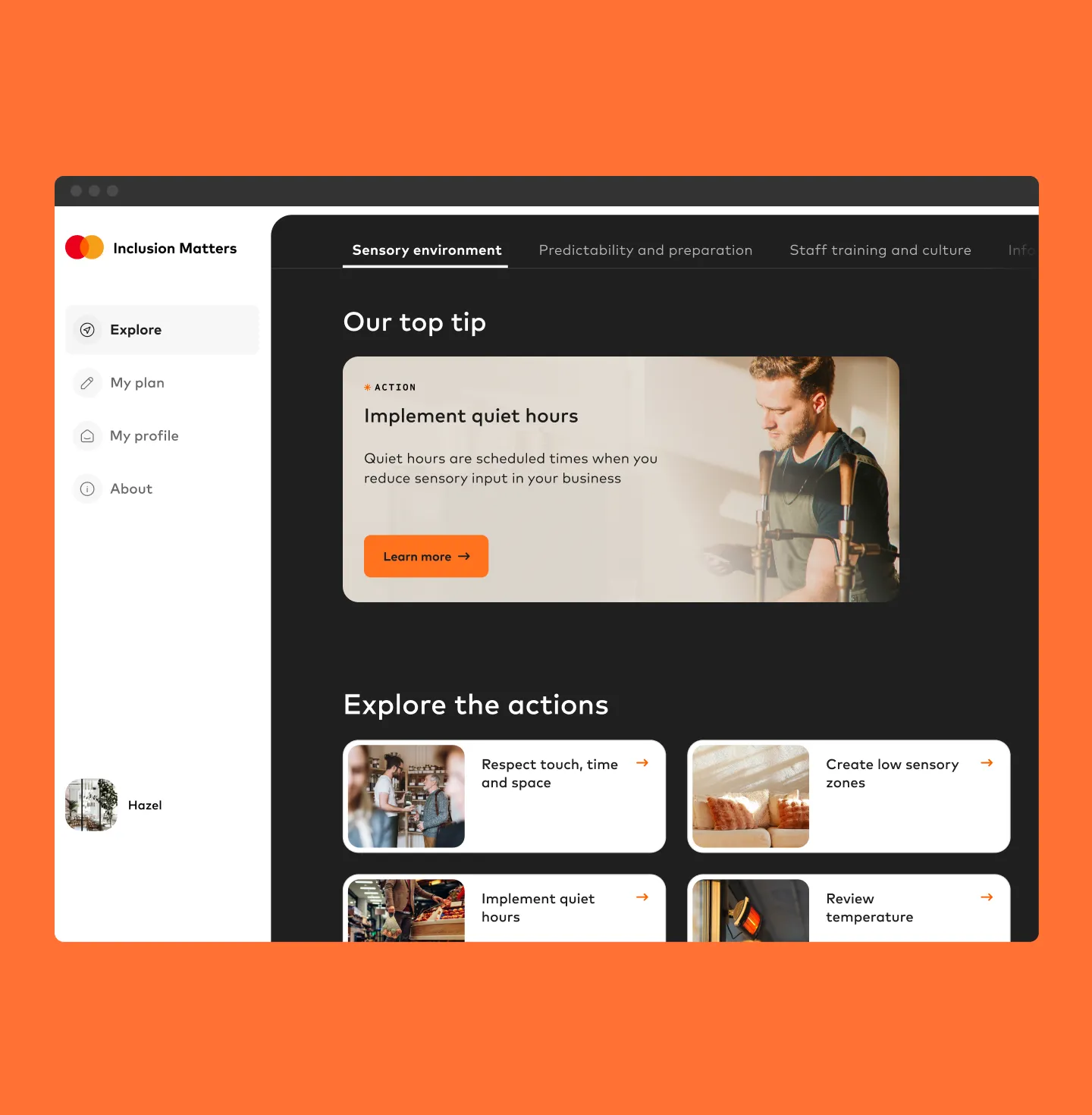
The Hub is designed as a fast, no-nonsense reference tool. The interface gets out of the way, allowing hospitality owners to quickly identify and save measures that are right-sized and high-impact for their context—whether that's quiet hours, staff training, or Sensory Notes.
Sensory Notes is a new menu framework that describes dishes in sensory detail—unpacking the appearance, preparation, arrangement and taste, rather than simply listing ingredients. Unlike traditional menus, it gives autistic people and those with sensory sensitivities the information they need to dine with confidence. Sensory Notes was piloted at the Australian Open’s Wonder Pies and Peach Melbourne, as well as The Mulberry Group’s Hazel Melbourne.
We built the platform to be fully accessible and responsive across devices. The Hub is built on Next.js with a headless CMS, giving content teams an easy way to manage inclusion resources while users get a fast, app-like experience. We built accessibility into the foundation using industry-standard components that work seamlessly with screen readers and keyboard navigation.
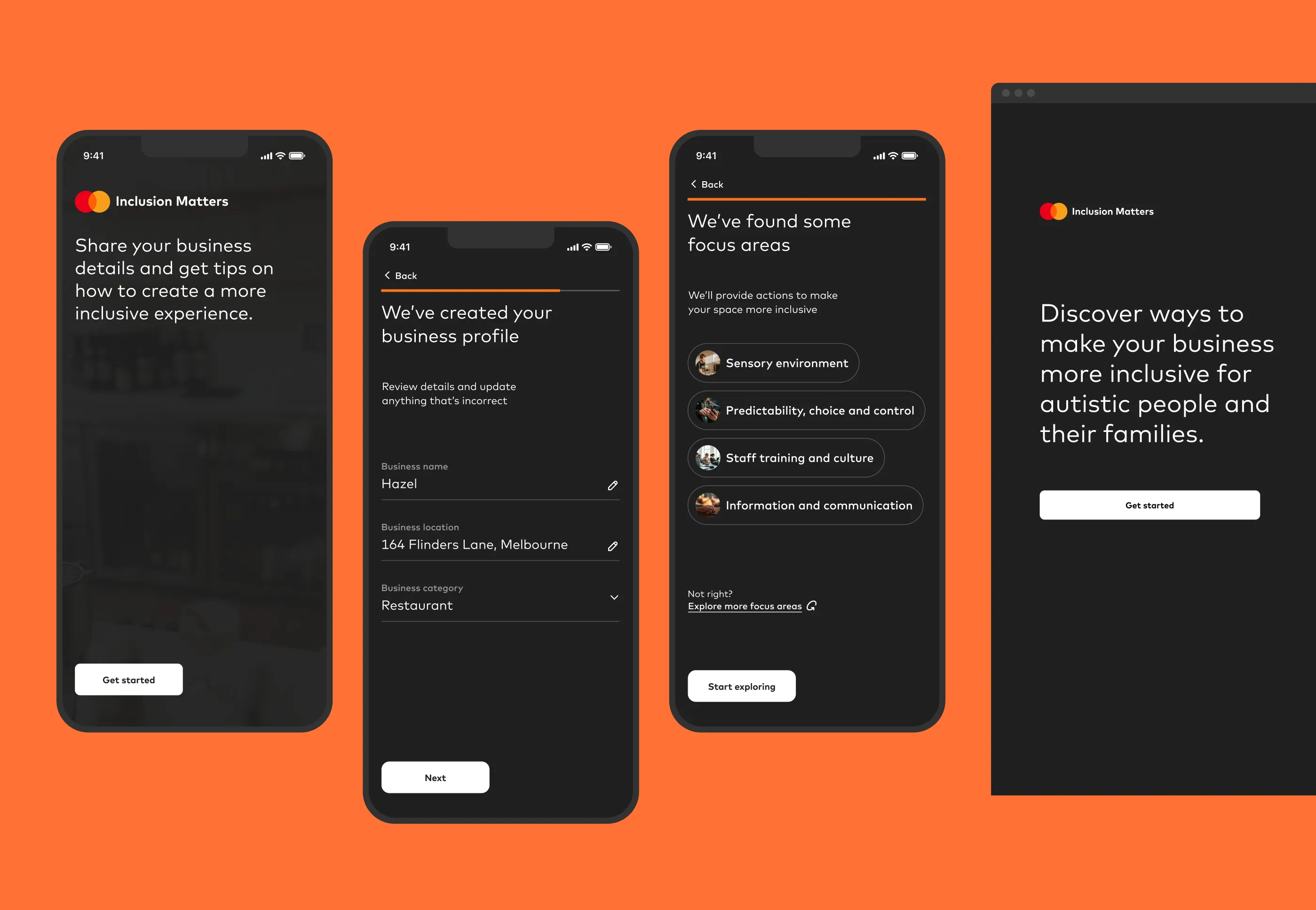
The onboarding flow connects to Google Places to auto-fill business details, saving time and reducing friction. Subtle animations guide users through the experience using motion principles that respect accessibility preferences, ensuring the interface feels responsive without overwhelming.
What’s next
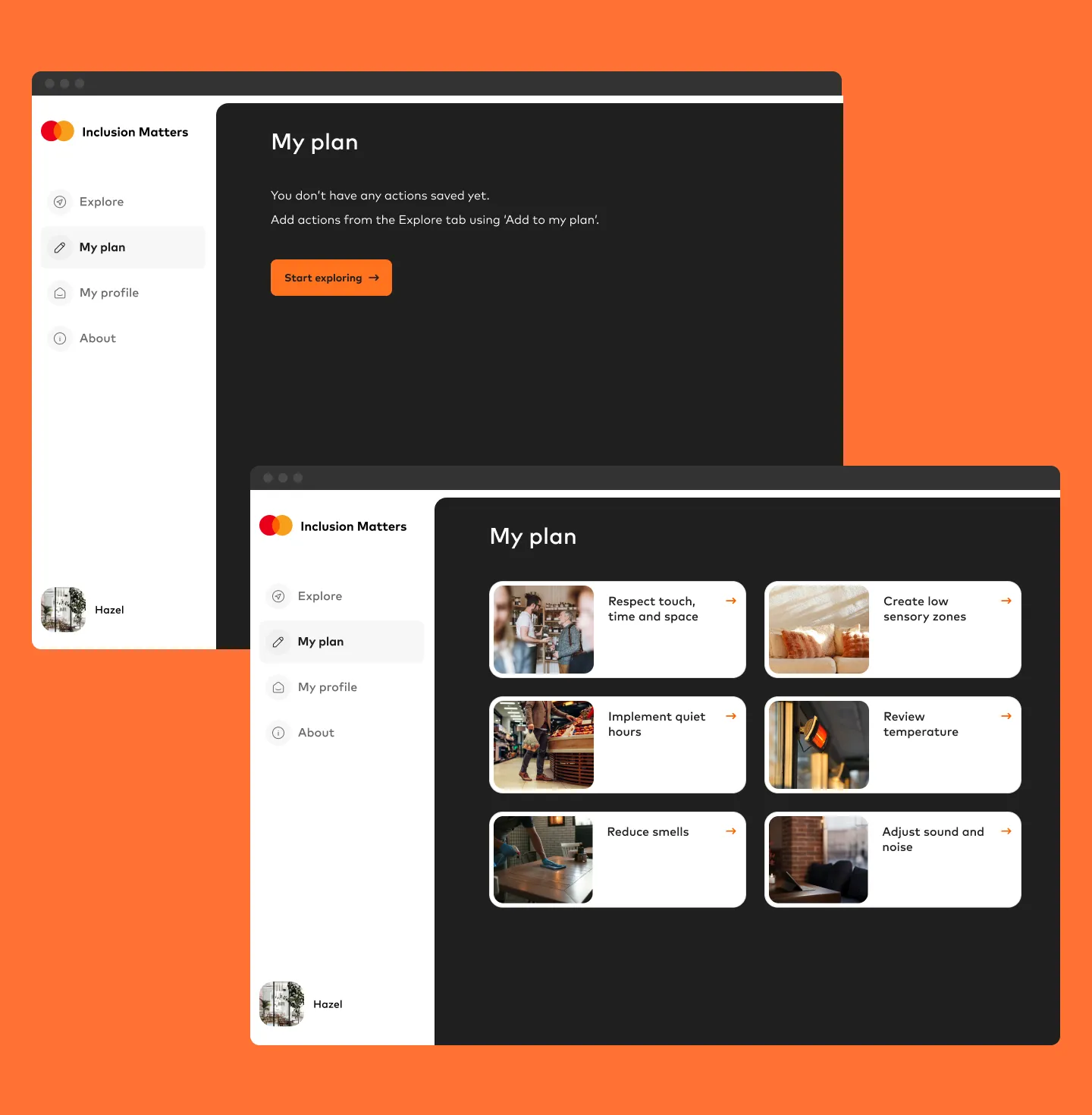
We're continuing to work with Mastercard and the autistic community to evolve the platform, adding features and functionality guided by the same principle: the community leads, and we design and build the tools that enable change.
“Inclusive design isn’t about doing good at a cost. It's about recognising that when we design with the full spectrum of human diversity in mind, we create better experiences for everyone. The autistic community deserves more than awareness—they deserve action. This is what action looks like.” - Adam Morris, Creative Director
Explore the Inclusion Hub . Read more about the project.